Nuclear power plays a large role in energy production in Ontario. For the last 60 years, nuclear energy has been responsible for over 50 percent of Ontario’s energy generation, and the Ontario government would like to see that grow.
To meet climate goals and electricity demand, the Ontario government is investing in the refurbishment of existing reactors and pioneering Small Modular Reactors (SMRs) in Ontario’s nuclear generating stations.
According to the Ontario Ministry of Energy and Mines, the nuclear industry is anticipated to create 150,000 new job opportunities in Ontario and add over $800 billion to Canada’s economy.
But how do you get one of these many jobs in the nuclear industry?
That’s where Ontario Tech University’s Nuclear Career Accelerator Program comes in. This 11-week program is a bridge to the nuclear sector, designed to fill the need for a skilled workforce that can maintain Canada’s leadership in clean energy and nuclear innovation.
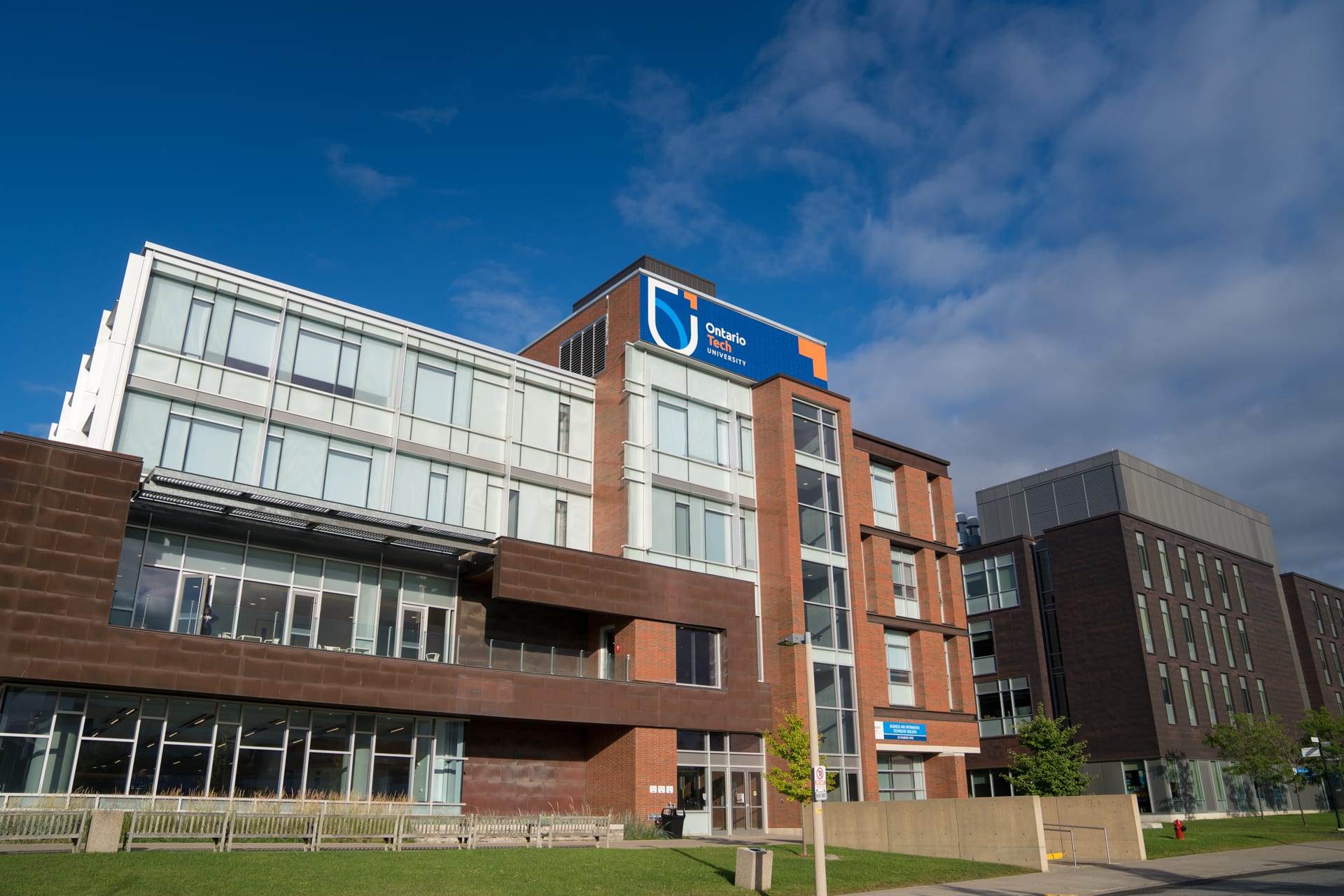
The program has piqued the interest of many engineers so far, with over 900 applications to their initial cohorts.
To learn more about this exciting new program, NEM Ontario sat with three staff at Ontario Tech University.
Shenelle Payne Cuffy, Manager, Career Services and Experiential Learning
Christopher Hall, Director, Continuous Learning
Dr. Jennifer McKellar, Department Chair & Associate Professor in the Department of Energy and Nuclear Engineering
Here are some excerpts from that conversation:
What is driving that push towards nuclear engineering?
Jennifer: We are projecting the demand for electricity to grow considerably. Part of that is a shift to electrification to try to mitigate climate change, to reduce our emissions of carbon dioxide and our extraction of fossil fuels. As we electrify, we’re going to need to supply the electricity, and nuclear power has the benefit of a safe, reliable supply of traditionally large amounts of energy.
Where is the future of nuclear energy headed in Ontario?
Jennifer: In the industry right now, there is decommissioning of nuclear facilities that will commence and carry on, and that’s a big job in and of itself. We’ve also got ongoing refurbishments and new builds that include large-scale projects and a small modular reactor that’s being built at Darlington Nuclear Generating Station. Other advanced reactors have been proposed as well.
Right now, there is a lot of activity in a pretty wide swath of areas in the sector. And so that’s generating a lot of excitement in the sector.
Tell us more about the Nuclear. Career Accelerator Program at Ontario Tech.
Christopher: The nuclear sector, to do everything that Jennifer talked about, has to hire people, and there simply aren’t enough individuals that have nuclear industry experience to meet the incredible demand of building new builds, SMRs, and refurbishments and everything that’s coming.
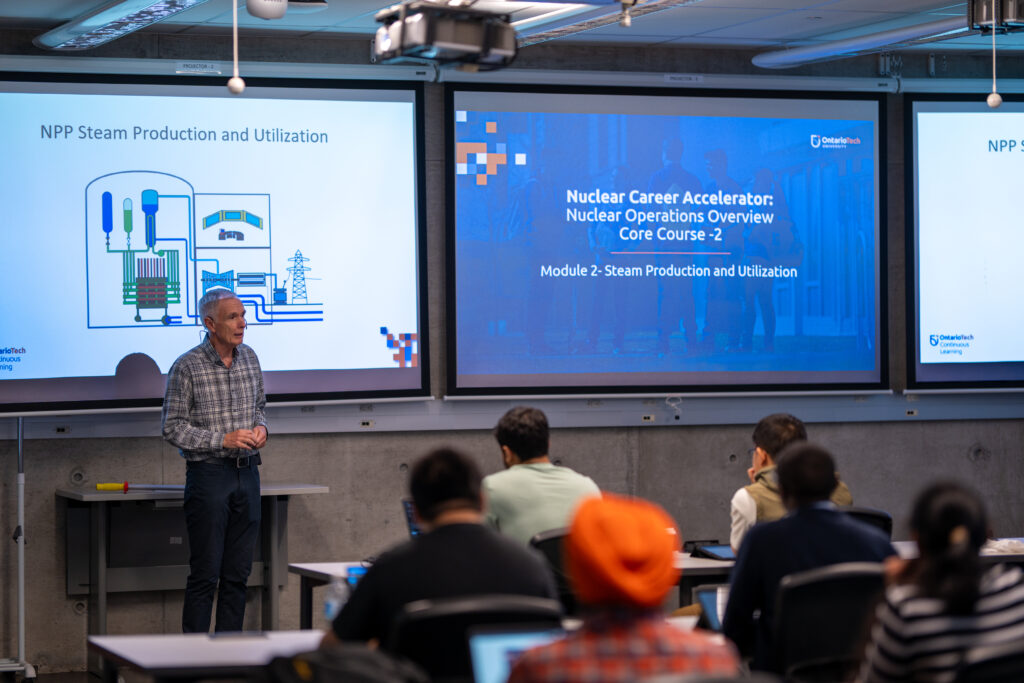
And so, the Nuclear Career Accelerator Program is designed for mid-career engineers and technical staff who’ve worked in other sectors, such as oil and gas and manufacturing, for example. It is an 11-week, 10-course program that can be done at the learner’s own pace.
The goal of the program is to recognize their skills as engineers, because those are transferable skills, and then elevate their knowledge and understanding and their competency in the nuclear sector, so they can be more employable in a short period of time.
What skills do people have that they usually don’t realize are more transferable than they might have thought?
Shenelle: Many do not adequately recognize the leadership skills that they might have acquired, whether that is for volunteering on different projects, taking initiatives and so on.
Communication skills, too, because in the nuclear industry, you’re going to be communicating with a lot of different people. Not only with your colleagues, but industry stakeholders, your management team, different clients, different vendors, and so being able to really think through what their needs are is vital.
What makes the nuclear sector an attractive sector to work in?
Jennifer: It’s a more diverse and dynamic industry than it looks like from the outside. There are a lot of different opportunities.
It’s also a relatively small community, so people know each other and there’s the opportunity for relationship building.
There’s also a very strong commitment to safe operations and people who care about the environment. Nuclear has been driven by climate change mitigation, and a lot of people who are going into the nuclear sector are thinking about it from the perspective that working in nuclear is a good way to contribute to that mission of reducing emissions.
Christopher: I would add that if you’ve already started a career in another sector and you’re thinking about doing nuclear; nuclear projects take 10 years or more.
We’ve just started some of the projects that are coming up. If you get a job in the sector now, and you’re the type of person who has quality and safety in your mind and in your process, and you understand the importance of working with others and being part of a team, you will have a really good career outlook.
This industry is going to continue now for 10 to 15 years just to get things built.

How was the program developed?
Christopher: It was funded by an organization called Upskill Canada through something called the Palette Grant. That grant gave us a lot of guidance because the main success outcome indicator is employment.
A large proportion of our learners need to have a vertical or horizontal job shift. So they have to get employment or change employment for the better in the nuclear sector within six months of completing the program. So, when we started to talk to the industry professionals about that, we went in with a focused mindset. We wanted to know how we could help them hire and meet hiring needs, and they helped us with the overall concept for the program.
What kind of jobs can people expect to be qualified for coming out of the program?
Shenelle: For many learners, it will be within an engineering domain, but it could also be technical jobs and positions too. We have also had many people who have been employed and are qualified to be able to work as project managers within the nuclear sector.
What elements of the program’s design kind of bring out the best in the people who take it?
Christopher: So the program is competency-based, which means that even though we’re teaching a lot of knowledge, each course has what’s called a summative authentic assessment.
So it’s not a series of multiple-choice questions and answers that test whether you’ve learned something; it forces you to use what you’ve learned and produce a report, a plan, a safety document, something that learners would have to do when they get into industry.
All of our courses are designed asynchronously, with a facilitator available to answer questions. This works well because a lot of people are working, and having scheduled courses and lectures for a fully employed individual with a family is very challenging, so many learners find this setup freeing.
And in terms of the work and the assessments, everybody gets two chances to pass their assessment. So, if you submit something and you don’t pass, which is rare, the facilitator gives you feedback and the opportunity to resubmit. We’re trying to give individuals who live busy lives an opportunity to pursue their education without the usual stress that may be associated with university-level programs.
These courses are also very focused on helping you think about what you’re doing now in your career, the skills that you currently have, and helping you reflect on how those skills can be put to use when you get into the nuclear sector.
If you’re interested in registering or learning more about Ontario Tech University’s Nuclear Career Accelerator, please visit ontariotechu.ca/nca. To browse all of Ontario Tech University’s nuclear industry training including Nuclear Project Management and Cybersecurity for Energy, please visit ontariotechu.ca/nucleartraining.